
The Reid Homestead

  • Garden
    • Growing Vegetables
      • Growing Tomatoes
      • Seed Starting
      • Saving Seed
      • Garden Pests, Diseases & Problems
      • Garden Harvest Tally
    • Growing Fruit
    • Growing Herbs
    • Gardening Tools & Equipment
    • Permaculture
    • Flowers
  • Food Preservation
    • Freezing
    • Canning
    • Cold Storage
    • Fermentation
    • Dehydrating
  • Homesteading
    • Animals
    • Making Money on the Homestead
    • Homestead DIY Projects
      • Crafts
      • Soaps, Scrubs & Bath Bombs
    • Blog Hops
      • Farm Fresh Tuesdays
    • Homestead Gift Ideas
    • Homestead Planning & Organization
      • Monthly Homestead To Do Lists
    • 5 Things Friday
  • Recipes
    • Appetizers
    • Breakfast
    • Desserts
    • Main Dish Recipes
    • Natural Remedies
    • Plant Based - Vegan - Vegetarian Recipes
    • Salads and Sides
    • Smoothies
  • Resources
    • Freebie Resource Library
    • Blogging Resources
  • Shop with Us!
    • Shop our Printables!
    • Shop Our Homestead Favorites
  • Subscribe
menu icon
go to homepage
  • Garden
    • Growing Vegetables
      • Growing Tomatoes
    • Growing Fruit
    • Growing Herbs
    • Garden Pests, Diseases & Problems
    • Gardening Tools & Equipment
    • Seed Starting
    • Saving Seed
    • Garden Harvest Tally
    • Flowers
    • Permaculture
  • Homestead
    • Animals
    • Monthly Homestead To Do Lists
    • Making Money on the Homestead
    • Homestead DIY Projects
      • Crafts
      • Soaps, Scrubs & Bath Bombs
    • Blog Hops
  • Food
    • Food Preservation
      • Canning
      • Cold Storage
      • Dehydrating
      • Freezing
      • Fermentation
    • Recipes
      • Appetizers
      • Breakfast
      • Christmas
      • Desserts
      • Drinks
      • Main Dish Recipes
      • Natural Remedies
      • Plant Based - Vegan - Vegetarian Recipes
      • Salads and Sides
      • Smoothies
      • Thanksgiving
  • Resources
    • Blogging Resources
    • Freebie Resource Library
  • Shop
    • Shop our Printables!
    • Shop Our Homestead Favorites
search icon
Homepage link
  • Garden
    • Growing Vegetables
      • Growing Tomatoes
    • Growing Fruit
    • Growing Herbs
    • Garden Pests, Diseases & Problems
    • Gardening Tools & Equipment
    • Seed Starting
    • Saving Seed
    • Garden Harvest Tally
    • Flowers
    • Permaculture
  • Homestead
    • Animals
    • Monthly Homestead To Do Lists
    • Making Money on the Homestead
    • Homestead DIY Projects
      • Crafts
      • Soaps, Scrubs & Bath Bombs
    • Blog Hops
  • Food
    • Food Preservation
      • Canning
      • Cold Storage
      • Dehydrating
      • Freezing
      • Fermentation
    • Recipes
      • Appetizers
      • Breakfast
      • Christmas
      • Desserts
      • Drinks
      • Main Dish Recipes
      • Natural Remedies
      • Plant Based - Vegan - Vegetarian Recipes
      • Salads and Sides
      • Smoothies
      • Thanksgiving
  • Resources
    • Blogging Resources
    • Freebie Resource Library
  • Shop
    • Shop our Printables!
    • Shop Our Homestead Favorites
×
Home » Food » Recipes » Condiments

How to Make and Store Homemade Butter

Modified: Mar 14, 2023 · Published: Mar 2, 2023 by Tamara · Leave a Comment · As an Amazon Associate I earn from qualifying purchases. You can read my full disclosure statement.

a jar of butter by a teal napkin, text overlay How to Make & Store homemade Butter

In this article I will teach you how to make and store homemade butter. Making your own butter is much more simple than one might think and only requires two ingredients and is a very easy recipe!

If you are wanting to live a more self sufficient lifestyle, making butter is a simple and easy thing to make. Think about all those sticks of butter you have bought at the store over time!

Making your own butter and avoiding store-bought butter, is one less dairy product you will need to depend on the grocery store for. Especially if you own dairy cows, or have easy access to raw milk or heavy whipping cream.

Actually, it is two dairy products that you would no longer need to purchase at the store, because buttermilk is a by product of making butter, so you get two products while making butter!

Raw fresh milk straight from the cow, is full of the cream, and the cream is what you need to make the butter. The cream is full of fat solids, which makes the butter, so no skimping on fat here by using half and half, or reduced fat cream.
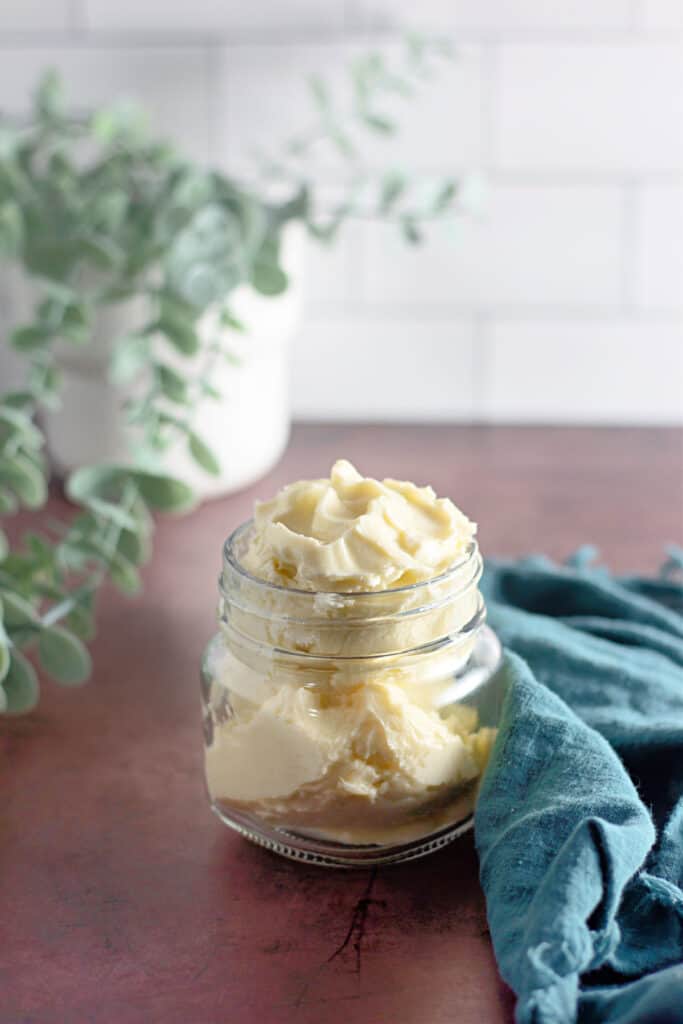
small jar of homemade butter on wood table next to plant and teal napkin

Jump to Recipe Print Recipe

It is easy to make with a food processor or a stand mixer, and the appliance really does all the work for you!

Other related articles you may be interested in:

Christmas Tree Rice Krispie Treats Recipe
No Bake Pumpkin Cheesecake Desserts
Patriotic White Chocolate Dipped Strawberries with Sprinkles

Our favorite homesteading and gardening tools in our Amazon Shop
Our Garden Harvest Tally Spreadsheet is now available!

HOW TO MAKE HOMEMADE BUTTER:

Notes:

  • This recipe should make about 1 cup of butter and 1 cup of buttermilk, but the exact amount varies depending on the fat content of the cream that you use.
  • It is best to shake the container of cream well before measuring it out for this recipe, to ensure that the fat is evenly distributed within the cream.

Servings: 1 cup of butter equals approximately 36 pats of butter.

Prep time: 10 minutes

Equipment needed to make Homemade Butter:

1 stand mixer with whisk attachment

1 fine mesh strainer

1 large bowl

1 medium bowl

1 flat wide wooden spoon

Ingredients needed to make Homemade Butter:
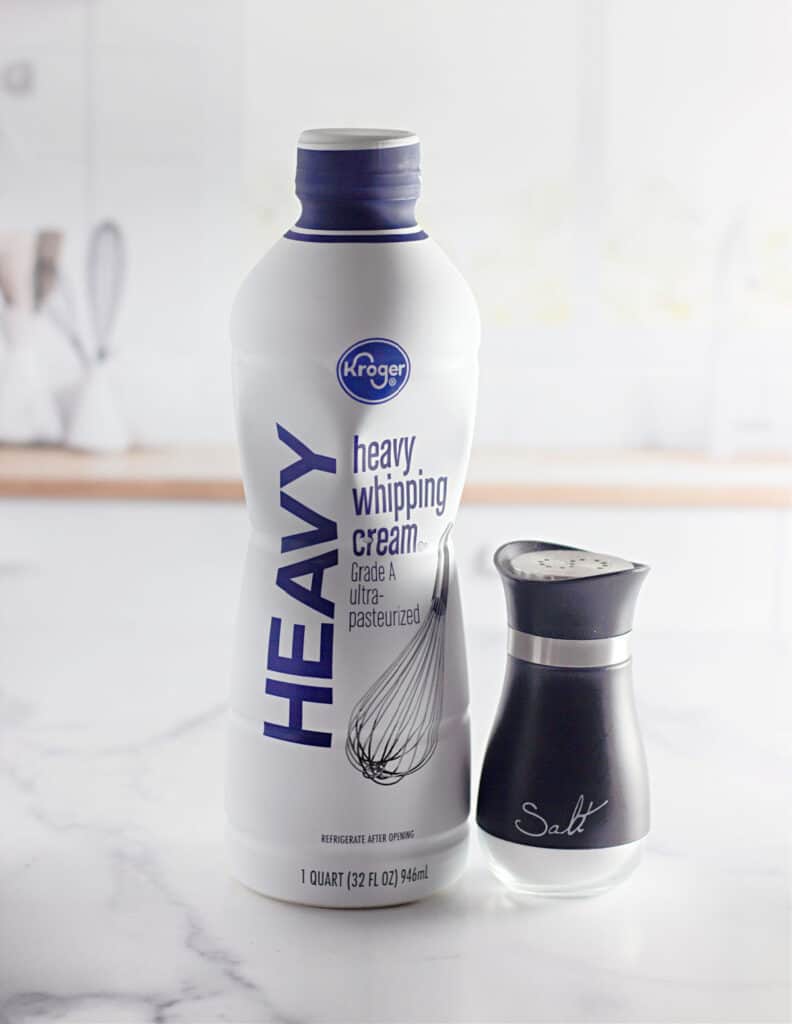
a store bought bottle of heavy whipping cream and a salt shaker

2 cups heavy whipping cream or fresh cream, but it must be a full fat cream.

¼ teaspoon salt (optional)

ice cold water in large bowl

Directions:

Step 1:
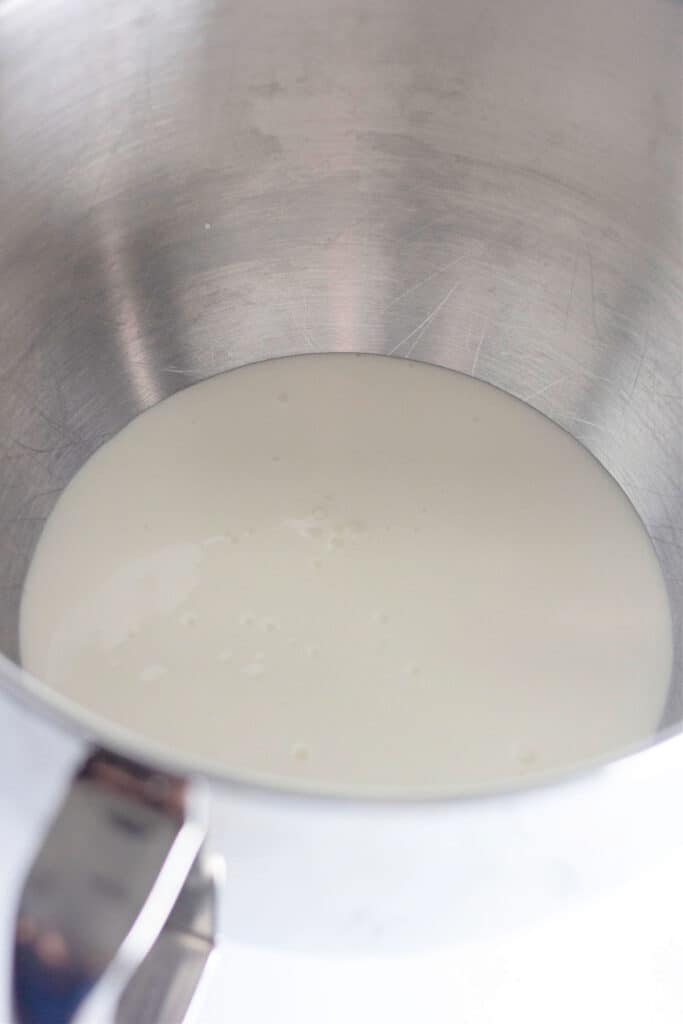
heavy cream in the mixing bowl

  • Add the heavy cream to the mixing bowl of your stand mixer. Then using the whisk attachment, beat the whipping cream on medium-high speed until the butter separate from the buttermilk. It is a good idea to use a splash guard on your mixing bowl if you have one. Or, if you like hard work, you can use a manual churner or an old-fashioned butter churn! 😉

Step 2:

butter fat seperated from the buttermilk in the mixing bowl

  • Scoop the butter solids out of the mixing bowl, leaving them in small pieces and place them into a fine mesh strainer. Refrigerate the buttermilk to use as desired, or discard.

Step 3:

  • Fill the large bowl with ice cold water. Rinse the butter well in the strainer with ice water by dunking the strainer in the bowl, to remove any extra buttermilk. Water should be ice cold so that it does not melt any of the butter fat away, and you are attempting to remove any and all excess buttermilk in this step. Butter will be rinsed well enough when the water in the bowl is clear, not white. You may need to dump and replace the ice water a couple of times.

Step 3:
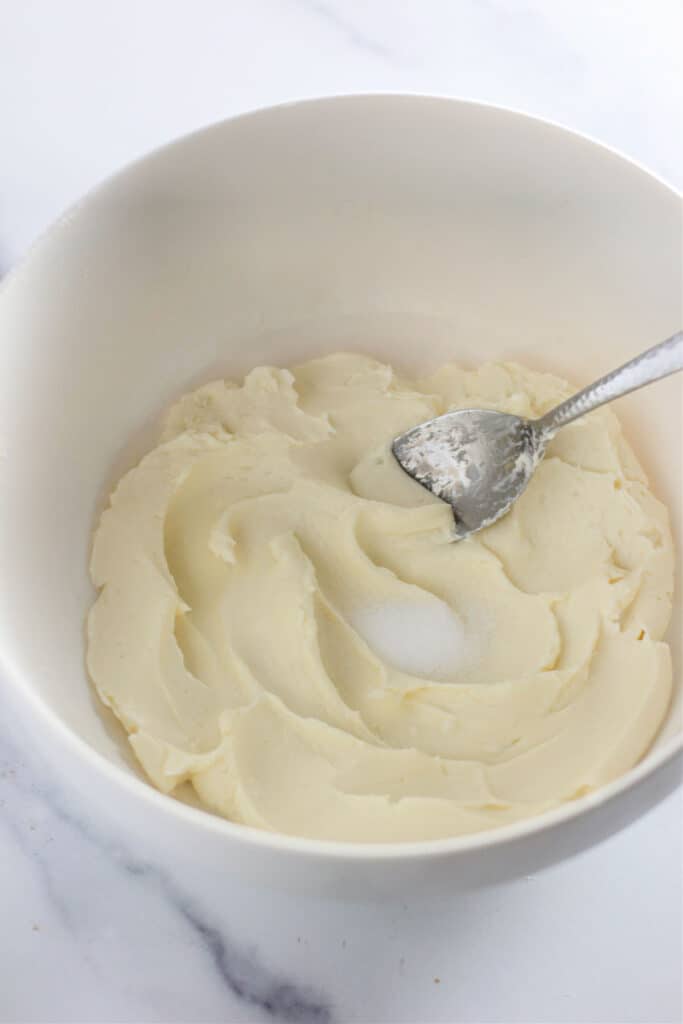
butter added to bowl with salt

  • After rinsing well, add the butter fat and the salt (if using) to the medium bowl and stir well, while also pressing out any additional liquid from the butter. If not using salt, still do this step, trying to remove as much liquid from the butter by mashing it against the sides of the bowls.
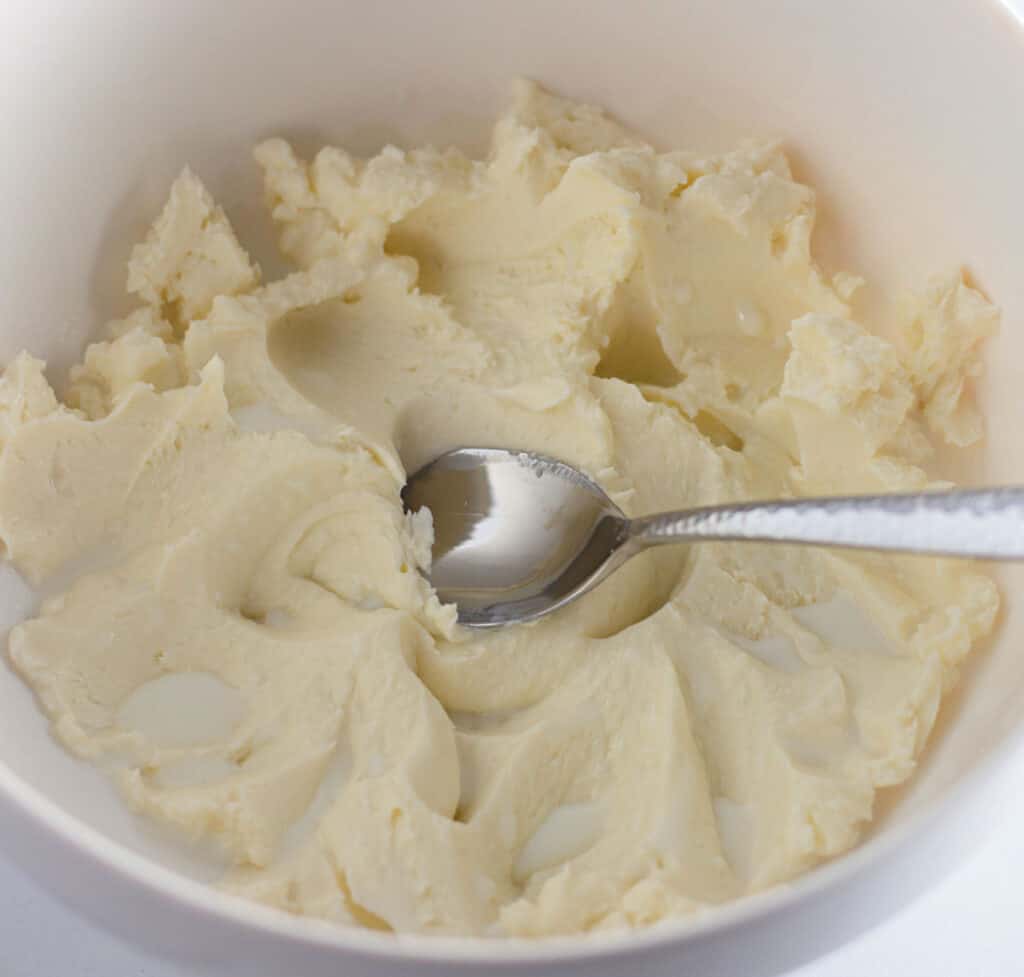
butter mashed in a bowl with pools of buttermilk
If you look closely at this photo, you can see pools of buttermilk that have been worked out by mashing the butter with the spoon.

Step 4:

  • Pour off any excess liquid. Place ball of solid butter on a clean tea towel and pat dry to remove any excess moisture. The more moisture and water molecules that you remove, the longer the butter will store well.

Step 5:

  • Shape butter into a ball or other shape of your choice and serve immediately, or chill in the refrigerator until use.
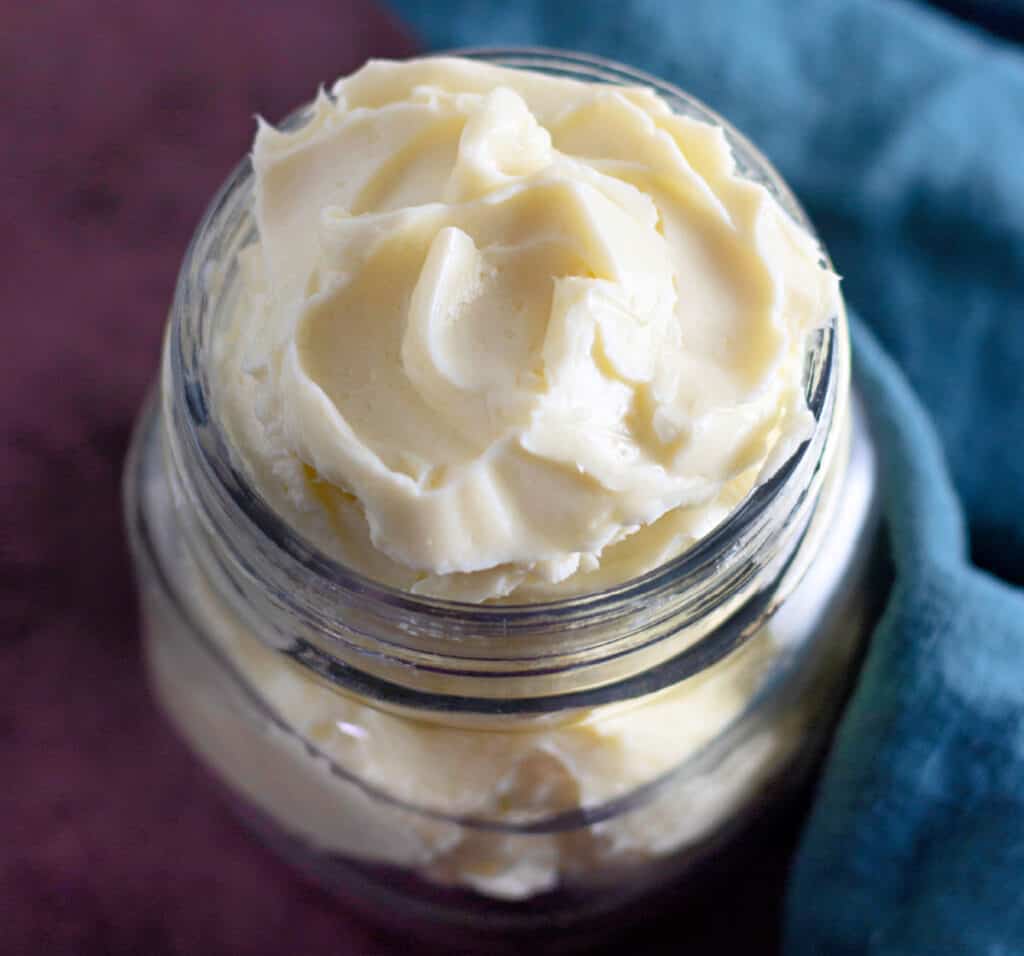
close up of jar of homemade butter

HOW TO STORE HOMEMADE BUTTER:

How long your homemade butter will store well for, depends on how much moisture you have removed from it, so DO NOT skip this very important step.

Homemade butter has a long shelf life, and will keep in the refrigerator for up to three months if rinsed well and wrapped well. Butter freezes very well also and can be stored in the freezer for up to a year.

The USDA recommends not leaving butter out at room temperature for more than a couple of days, or you could end up with rancid butter. But leaving it at room temperature, does make for a more spreadable butter.
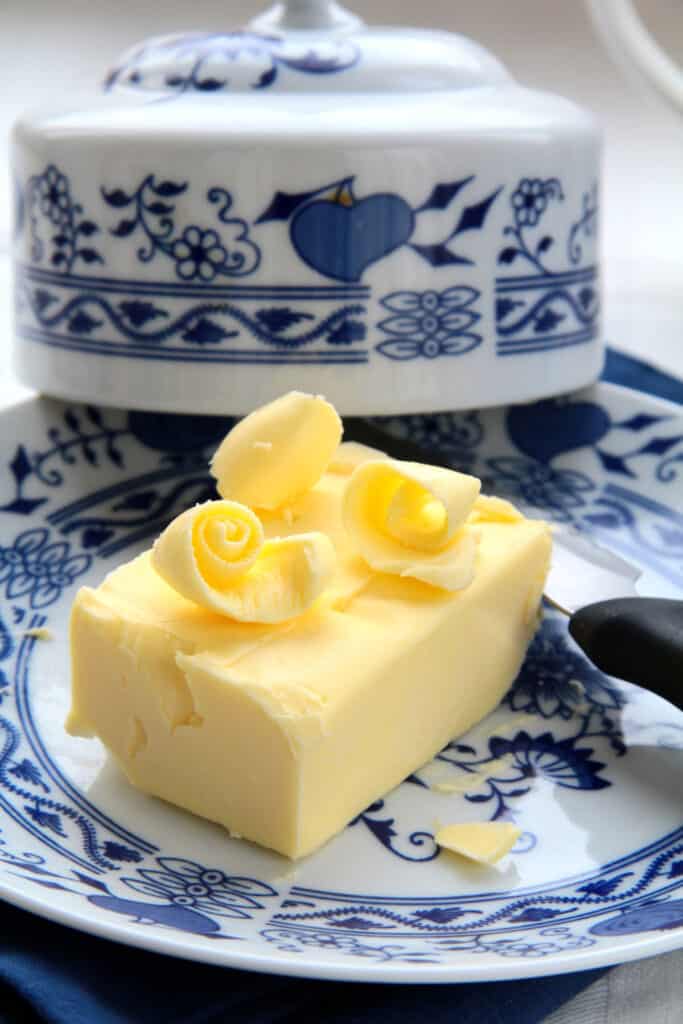
a stick of homemade butter on a blue and white plate with a matching blue and white butter crock cover

You can store butter in many ways, such as in a butter dish, in butter bells, butter crock, mason jar, plastic wrap,  or any airtight container.

If your butter smells like sour milk, it has gone bad and do not eat it.

Other Ideas for Using Your Homemade Butter:

Compound Butters: Compound butters are simply flavored butters. Consider adding in some herbs or garlic to your homemade butter to make a compound butter. Some ideas for this are adding in basil, thyme, rosemary, chipotle-lime, cinnamon, sun dried tomato, honey & orange, tarragon, etc. There are endless possibilities!
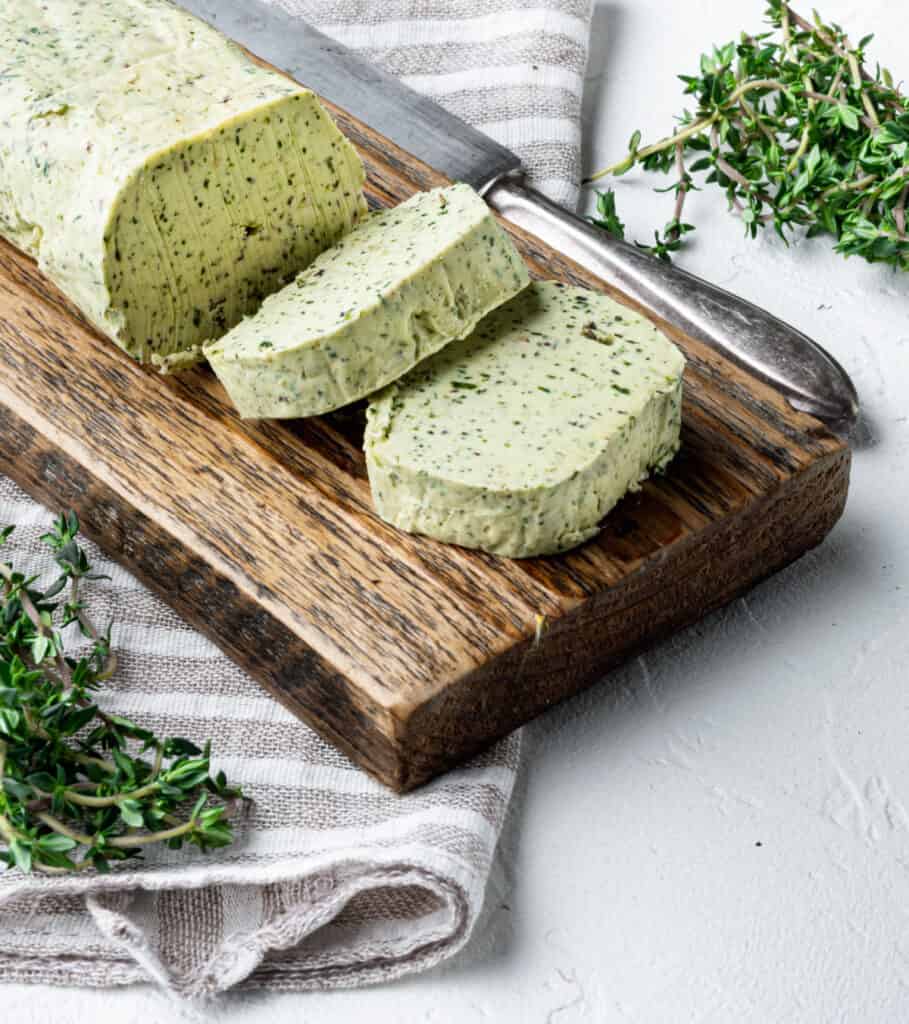
a wood cutting board with a homemade stick of compound butter with some fresh herbs

small jar of homemade butter by teal napkin, text overlay How to Make and Store homemade butter

Homemade Butter Recipe

A simple two ingredient recipe for making homemade butter using heavy whipping cream and salt.
Print Recipe Pin Recipe
Prep Time 10 minutes mins
Cook Time 0 minutes mins
Total Time 10 minutes mins
Course Condiment
Cuisine American
Servings 36 servings

Equipment

  • 1 stand mixer
  • 1 medium bowl
  • 1 flat wide wooden spoon
  • 1 large bowl
  • 1 fine mesh strainer

Ingredients
  

  • 2 cups heavy whipping cream
  • ¼ teaspoon salt (optional)

Instructions
 

  • In the mixing bowl of a stand mixer, beat the whipping cream on medium-high speed until the butter is separated from the buttermilk.
  • Scoop the butter fat out of the mixing bowl leaving them in small pieces and place into a fine mesh strainer. Refrigerate the buttermilk to use as desired, or discard.
  • Fill the large bowl with ice cold water. Rinse the butter well in the strainer with ice water by dunking the strainer in the bowl, to remove any extra buttermilk. Water should be ice cold so that it does not melt any of the butter fat away, and you are attempting to remove any and all excess buttermilk in this step.
  • After rinsing well, add the butter fat and the salt (if using) to the medium bowl and stir well, while also pressing out any additional liquid from the butter. If not using salt, still do this step, trying to remove as much liquid from the butter by mashing it against the sides of the bowls with the spoon.
  • Pour off any excess liquid. Place ball of solid butter on a clean tea towel and pat dry to remove any excess moisture. The more moisture and water molecules that you remove, the longer the butter will store well.
  • Shape butter into a ball or other shape of your choice and serve immediately, or chill in the refrigerator until use.
Keyword easy, stand mixer
Tried this recipe?Let us know how it was!


Want to Remember This?

Pin it for later reference! Pin "How to Make and Store Homemade Butter" on Pinterest to your favorite Recipe board so you can find it again easily! Or share on Facebook too!
a jar of butter by a teal napkin, text overlay How to Make & Store homemade Butter


More Condiments

Sharing is caring!

1115 shares
  • Facebook
  • X
  • Email
  • Flipboard

Leave a Reply Cancel reply

Your email address will not be published. Required fields are marked *

Recipe Rating


This site uses Akismet to reduce spam. Learn how your comment data is processed.

Welcome!

Welcome! At The Reid Homestead, we have been growing, harvesting and preserving food for over 20 years. We love teaching and sharing our methods to help others grow, harvest and preserve their own home grown food! We also will share some of our favorite recipes and an occasional craft tutorial here and there!

More about me

Popular

  • photo of seed starting rack with trays of seed starts on it with text overlay Seed Starting 101: Essential Equipment
    Seed Starting 101 Series: Seed Starting Equipment Set Up
  • photo of milk jugs in the snow that have been winter sown with text overlay Seed Starting with Winter Sowing
    Seed Starting 101: A Guide to Winter Sowing in Milk Jugs
  • straw bale cold frame with text overlay How to Build a Straw Bale Cold Frame
    How to Build a Straw Bale Cold Frame
  • photo of new seedlings germinating in a seed flat with text overlay Seed Starting Schedule for Garden Zone 8b
    When to Start Vegetable Seeds in Garden Zone 8b

Latest Posts

  • close up of a tin of yarrow salve, text overlay Easy DIY Yarrow Salve Recipe
    Easy DIY Yarrow Salve Recipe
  • close up of a plate of Easter M&M Oreo Bark pieces, text overlay Easter M&M Oreo Bark Recipe
    Easter M&M Oreo Bark Recipe
  • close up of homemade honey almond scrub bars, text overlay DIY honey almond sugar scrub bars
    DIY Honey Almond Sugar Scrub Bars
  • close up of a glass of peppermint white chocolate mocha on a saucer with mini-marshmallows, text overlay Peppermint White Chocolate Mocha Recipe
    Peppermint White Chocolate Mocha Recipe

Footer

↑ back to top

Legal Stuff

  • Disclosure
  • Privacy Policy
  • Terms and Conditions

Tip Jar

  • Buy me a coffee!

Other Tidbits

  • About Me
  • Contact Me
  • Web Stories!

You're welcome and encouraged to link to TheReidHomestead.com or use a single image with a brief description to link back to any post with a do follow link. Republishing posts in their entirety is prohibited. Feel free to pin on Pinterest! Thank You!

Copyright © 2026 The Reid Homestead

1115 shares